only one road revisited

Only One Road Revisited

Misha Feigin – classical guitar, voice 1-17 / balalaika 17 | Marc Vainrot – viola de gamba 3,4 | Segei Proshutinsky – medieval flutes, crumhorn 2,3,4 | Segei Kopchenkov – piano, harpsichord 7,11 | Alexander Ivanov – keyboard 6,11 | Sergei Gurgbeloshvili – saxophone 7 | Mark Pekarsky – percussions 9 | Mihail Utkin – cello 9 | Lliya Lungin – flute 10 | Moscow String Quartet 9 | Mark Hamilton – electric guitars, electronics 12-17 | Dannie Kely – bass 12-17 | Hussam Al-Aydi – oud, keyboards, voice 14

Cover photo by LaDonna Smith. Insert photo by Misha Feigin. Back cover photo by Valentin Mitskevich


Disc 1: In Russia

1. Magic Forest (Misha Feigin) [2:23] 2. Among The Roses (Misha Feigin/Walter de la Mare) [2:01] 3. Gillome de Cabestagne Ballade (Misha Feigin) [3:09] 4. Graf Von Gleichen Ballade (Misha Feigin) [4:22] 5. Under The Moon Drinking Alone (Misha Feigin/Li Po) [4:11] 6. Bonfire (Misha Feigin) [3:16] 7. Wave To Me (Misha Feigin) [3:17] 8. Asking My Friend (Misha Feigin/Bai Juyi) [3:21] 9. On The Road (Misha Feigin/Ovsei Driz) [2:30] & Kaddish (Tribute to Janos Korchak) (Misha Feigin) [3:54] 10. The Wind (Misha Feigin/Walter de la Mare) [2:30] | Total Time [38:44]


Disc 2: In America

1. Sometimes, Somehow, Somewhere (Misha Feigin) [5:46] 2. The Way It Shines (Misha Feigin] [4:34] 3. Dark Eyes (Folk) [6:22] 4. Refugee (Misha Feigin) [5:05] 5. Bad Day (Misha Feigin) [4:07] 6. Balalaika Dreams (Misha Feigin/Mark Hamilton [7:39] | Total Time: [33:37]


Buy Only One Road Revisited (CD or MP3 download) here…

both kinds of music

Both Kinds Of Music

Misha Feigin – balalaika, classical guitar in Duos with: Elliot Sharp – dobro | Davey Williams – electric guitar | LaDonna Smith – violin, dancing on a wooden box | Craig Hultgren – cello | Eugene Chadbourne – banjo, guitar

Track1 & 4 recorded by Elliot Sharp at his home studio in New York; 2 & 5 recorded by John Metro at the Birmingham Arts Association, Alabama; 3 recorded by Sam Gray at the Ramcat Studio in Louisville, Kentucky; 7 recorded at the concert at the Rietschule, Bern, Switzerland. All pieces are improvised, and recorded during 1998. All music by Misha Feigin (BMI) published by Alissa Publishing/PRS. Mastered by Stan Wijnans, LMC Sound. Front cover collage by Misha Feigin. Photo by Oli Jensen. Produced by Leo Feigin.

Tracklist: 1. Both Kinds of Music – [12’02] Misha Feigin – balalaika, Elliot Sharp – dobro 2. Balalaikofrenia – [4’29] Misha Feigin – balalaika, Davey Williams – electric guitar, LaDonna Smith – dancing on a big wooden box 3. Moondance – [9’39] Misha Feigin – classical guitar, Craig Hultgren – cello 4. Zohar Cafe Blues – [3’46] Misha Feigin – balalaika, Elliot Sharp – dobro 5. BBQ-Powered Mission to Outer Space -[11’37] Misha Feigin – classical guitar, Davey Williams – electric guitar 6. String Theory Revisited – [11 ’54] Misha Feigin – classical guitar, LaDonna Smith – violin 7. A Meter Violation – [16’27] Misha Feigin – classical guitar, balalaika, Eugene Chadbourne – banjo, guitar | Total time: 69’56


listen to Misha Feigin & Davey Williams & LaDonna Smith | Balalaikofrenia


“Both kinds of music” refers, of course, to “Country” and “Western”. Rediscovering country music has been something the avant garde has enjoyed doing in a tongue-in-cheek, knowingly urban way for decades, but more recently something less deliberately parodic has been going on between the two seemingly incommensurable genres. The Bubbadinos certainly play some species of white American folk music, but it’s hardly Nashville, and Misha Feigin is a free improvising Russian Balalaika player; it’s not even clear which kinds of music are being played, exactly, any more. — Richard Cochrane


If you’ve never heard a free-style jazz duet between a balalaika and a dobro, and you have a desire to do so, this CD should appeal to you. Actually, this is much more than a novelty album, as Feigin strums his guitar-like balalaika and classical guitar through seven jazz duets with Elliot Sharp (dobro), Davey Williams (electric guitar), Craig Hultgren (cello), LaDonna Smith (violin), and Eugene Chadbourne (banjo and guitar). The star billing is entirely appropriate, as each track is a stunning display of string improvisation. There is lots of variety as not only do the instruments and players alternate, but so do the free improvisations. Surprisingly accessible and at times even soothing, there is plenty of stridency, too. The duel with Hultgren is a particular highlight, as the violinist dances gingerly, without missing a step. Feigin (no relation to Leo Feigin, the producer) is strong throughout and a perfect partner. — Steve Loewy


For those who enjoy dobro and balalaika instrumentation, this jazz CD of 69:56 minutes will both intrigue and delight. That Misha Feigin is a master of his instrument is very evident in this collection. Feigin has duos with Elliot Sharp on dobro, Davey Williams on electric guitar, LaDonna Smith on violin (and dancing on a wooden box!), Craig Hultgren on cello, and Eugene Chadbourne on guitar and banjo. Some of the song titles include, among others, “Both Kinds of Music,” “Balaiaikofrenia,” “Moondance,” and “Zohar Cafe Blues.” Misha Feigin is one of the most well-known balalaika performers in the world, and this CD highlights those fine musical gifts. — Lee Prosser


Buy Both Kinds Of Music (CD or MP3) here…

waters ashore

Waters Ashore

Dave Liebmann – saxophones, flute, reading | LaDonna Smith – violin & viola | Misha Feigin – guitar & balaleika | Jason Foureman – contrabass (cuts 4 and 5)

Recorded June 28, 2006 Louisville, KY, USA by Steve Good. Text: “Jazz” by Misha Feigin, read by Dave Liebman. Cover art by 3ddie Melton. Transmuseq Records, www.transmuseq.com PO Box 430128, Birmingham, AL 35243 (205)967-0392 c&p 2007, transmuseq BMI, all rights reserved.

Tracklist: 1. Drink Deep [20:26] 2. Ancient Memories [8:15] 3. Heart and Other Difficulties [15:22] 4. Jazz [7:04] 5. Waters Ashore [7/35]


Waters Ashore

Being a musician means to perceive and to express the world, including ourselves, through the sound. Music provides a practical experience in the search for the universality of all human beings.

With all variety of genres and types of music, there are a few focusing on improvisation, perhaps the most ancient form of musical expression. Those are traditional ethnic folk music, free improvisation, and jazz. Any jazz musician can sit-in, in a band playing standards, because they speak the same musical language.

Free improvisers can meet each other for the first time in a concert. World music brings together all possible blends of ethnic cultures and improvisational practices.

Music is the most accessible form of universal language that is being practiced today. So, bringing together a jazz icon, Dave Liebman with one of the pioneers of free improvisied music in America, LaDonna Smith, and Misha Feigin, Moscow born poet-musician, who was experimented with the fusion of free improvisation and ethnic folk music, seems to be a natural example of this musical universality.

This recording documents a musical journey that the three of us took, meeting for the first time in Louisville, Kentucky on June 28, 2006, and embarking on a three hour musical recording session together. All pieces on this recording were improvised in the spirit of communal musical exploration and mutual respect.

Waters come ashore, bringing with it the debris from the depths of the ocean. Like our imagination reveals the tide of our traditions and experience, we are left with the evidence of natural change and assimilation. Drink deep.


listen to Dave Liebman & LaDonna Smith & Misha Feigin & Jason Foureman | Waters Ashore (excerpt)

listen to Dave Liebman & LaDonna Smith & Misha Feigin & Jason Foureman | Jazz  (excerpt)


Buy Waters Ashore (CD or MP3) here…

floating bridges

STRING TREK

LADONNA SMITH – violin, viola, voice  | MISHA FEIGIN – voice, guitar, balalaika

Floating Bridges tracklist:  1. Krakow Concerto [18:53] 2. Tribal Reverberation [3:09] 3. Klebnikov [5:39] 4. Die to Live [10:09] 5. Crossed Currents [6:21] 6. Something Reduced [:47]

Recorded live on June 6, 2007 at “Meeting of Improvisers” Centrum Sztuki Wspolczesnej ,,Solvay” Krakow, Poland. Our thanks to Rafal Mazur, Festival Director, Rafa! Drevyani Recording-Producer, & Bogdan Czyszczan, technical assistance. CD replication by N-House. Produced by LaDonna Smith, Birmingham, Alabama. STRINGTREK is LaDonna Smith & Misha Feigin. (c) & (p) TRANSMUSEQ RECORDS 2007, BMI. (all rights reserved) www.transmuseq.com

listen to LaDonna Smith & Misha Feigin | Tribal Reverberation


Buy LaDonna Smith & Misha Feigin – Floating Bridges (CD or MP3) here…


Floating Bridges

radiates with high energy interplay from the first notes and reveals a musical dynamism of fluid invention and sympathetic creation from the String Trek duo of violist La Donna Smith and guitarist Misha Feigin.

Recorded in June, 2007 at the “Meeting of Improvisers” in Krakow, Poland, the set opens with the nineteen-minute “Krakow Concerto.” After the initial shock but superficial comparison to the duo of Smith and guitarist Davey Williams heard live during the 1970s-80s, String Trek comes crisply into focus with its own characteristic sound and approach. This well recorded live performance captures the duo at a high point of artistic collaboration.

Throughout “Concerto,” Feigin ranges over his instrument, picking glittering and articulate lines, pulling strings and producing massive rhythmic chords—drawing sounds out, at times, both delicate and tough, but constantly inventive and responsive to his musical partner. He doesn’t sound like any other free improvising guitarist and has the energy and technique to be the perfect musical foil to the energetic and expressive Smith.

Smith bows clean lines as well as smeared resonances, often joining her voice to that of her unmistakable viola. Neither is the leader, but the two blend into a perfect and satisfying union. “Concerto” fluidly travels from free invention into the p[layers’ shared European folk and Southern blues influences. The melodies that appear seem completely organic and natural with only a hint of cultural exoticism.

“Tribal Reverberation” has both performers vocalizing from z’aum abstractions to extended vocal technique, from folk melodies to rhythmic cadences. A wonderful, but brief, piece of mouth music.

“Klebnikov” is a sober meditation on the transience of life, penned by Velimir Hlebnikov in 1920 and recited here, first in Russian, and then translated by Feigin with pizzicati and chordal accompaniment. The mood continues with “Die to Live,” picking up first with muscular and virtuosic sequences interleaved with rhapsodic lyricism and then integrating Feigin improvising on his poem, “The wind blows through space…,” which ends the sequence as a paean to the fleetness of experience. The integration of the reading with the music is so seamless as to avoid comparison to most jazz/poetry collaborations. In all, a beautiful connection to the Russian language exploration of the Futurist years—a sensibility shared by both artists—and the tenuousness of the art of improvisation.

The concert ends with “Crossed Currents,” an extended exploration of string color restlessly moving from technique to technique and culminating with an energetic vocal and slide guitar send-off. Ending, Smith announces in her characteristic way, “That’s all folks.” A brief encore of a few seconds, “Something Reduced” follows.

Smith’s early Trans Duo recordings were often marred with mediocre recordings and abbreviated sets. The quality of this release, both in clarity of recording and artistic achievement, makes up for that lack. Together, Smith and Feigin have moved beyond Yokel Yen(Transmuseq, 2004) with an organic rightness to their approach.

Track Listing: Krakow Concerto; Tribal Reverberation; Klebnikov; Die to Live; Crossed Currents; Something Reduced. Personnel: La Donna Smith: violin, viola, voice; Misha Feigin: voice, guitar, balalaika. Record Label: Transmuseq | Style: Modern Jazz. review from All About Jazz: By THOMAS GAUDYNSKI, Published: April 20, 2008

abraham’s bagel

Abraham’s Bagel

is Misha Feigin’s second collection of poetry. He has received the Thomas Merton Prize for Poetry and was awarded the Al Smith Fellowship for Creative Nonfiction. His other books include Searching for Irina and The Last Word in Astronomy, both by Fleur Publishing.

Misha Feigin was born and raised in Moscow and known as one of Russia’s premier guitarists. He released two albums on the state label Melodiya.

Since moving to the U.S. in 1990, Misha has been featured on National Public Radio and BBC. He has toured throughout North America and Europe releasing ten CDs in America and Germany, and two in Great Britain on Leo Records.

Misha Feigin performed on many prestigious stages such as Moscow’s Concert Hall Russia, Washington’s Kennedy Center, Vancouver Jazz Festival, and Winnipeg Folk Festival. He lives in Louisville, Kentucky.

“Soon is nothing and Soon is a lot, Soon is everything, Soon is death” Heinrich Böll


Soon Is Enough

Tuning to the music
Of the moment,
All you can do –
Simply watch
Its glistening skin
Dissolving in the haze
Of imperceptiveness
Leaving a fleeting
Imprint on your retina –
Just like a shifting web
Of sparks emerging
In your sight
When you have your
Eyes shut after
A careless glimpse
Of the sun.


Buy Misha Feigin – Abraham’s Bagel (Book, signed copy, or PDF donwload) here…


This book is also available via the following web pages:

BookSense / American Booksellers Association (ABA) www.booksense.com | BooksonBoard www.booksonboard.com | Cokesbury.com www.cokesbury.com | Computer Manuals Ltd. www.ereadable.com | Diesel eBooks (Tools of the Shade, LLC) www.diesel-ebooks.com | eBookMall www.ebookmall.com | Fictionwise www.fictionwise.com | www.ereader.com | Lybrary.com www.lybrary.com | Powells www.powells.com | Publisher Services Inc. www.onebookshelf.com


Misha Feigin’s

second book of poetry, “Abraham’s Bagel,” shows a reflective mind that appreciates each of life’s creations, in its own unique importance. The poet, who was born and raised in Moscow, came to America in 1990. He has won the Thomas Merton Prize for Poetry and the Al Smith Fellowship for Creative Non-Fiction. The intimacy of his work allows us into his mind — he even probes his own creativity. In “Dark Matter,” he wonders if his thoughts will produce good writing, and if so, will he know the time to introduce it:

Sweet things of the past
Finally ripen — withered fruit
Of suspicious diversity —
Leave it to the worms!
Days of anguish and nights of despair
Fermented into a decent wine —
But what is an occasion
To uncork it?

Feigin is known as one of Russia’s premier guitarists, and has toured Europe and North America performing on such prestigious stages as Moscow’s Concert Hall and Washington’s Kennedy Center. As we see what he sees, our imagination glides along with an undercurrent of music. His poetry is filled with phrases that stir a tonal resonance: “Waiting to burst out … sending off ripples … pace, melody, and silence … You can hear the sound between the sounds … (as it) wraps you with the song/ You are longing to sing … focused on a vibration.”

I invite you to read this book twice so you won’t leave treasure behind. This poet lifts the ordinary into something grand. When he takes a walk in Cave Hill Cemetery, he transports the reader into his creation of simple things made poignant by his reflection: “A spring rain,/ Warm and slow/ Tickles the black asphalt …” He notices the magnolia tree, the tires rustling by, Canada geese honking.

At other times, he takes a serious subject and gives it an unexpected turn that makes it witty, but not mean. In the last four lines of the title poem, the narrator contemplates the beginning of the 1917 Russian Revolution:

Remember? Battleship Aurora’s salvo
Cures excesses of evolution,
Initiates new dawns, eliminates …
Kaboom!!! Oy. …

The main outlet for “Abraham’s Bagel” is The Second Story bookstore on Highland Avenue. It is also available at Barnes and Noble. — written by Mary Popham. (Mary Popham is a writer and critic who lives in Louisville.)

searching for irina

Searching For Irina by Misha Feigin Manuscript and Collage Illustration Copyright © 2003, Misha Feigin Searching for Irina Illustration Copyright © 1990, Vadim Sidur. Publication Copyright © 2003, Fleur Art Productions. All rights reserved. No part of this book may be reproduced or utilized in any form or by any means, electronic or mechanical, including photocopying, recording, scanning, or by any information storage or retrieval system, without permission in writing from the Publisher. Inquiries should be addressed to Fleur Publishing Copyright Department, 32 North Goodwin Avenue, Elmsford, N.Y. 10523. Publisher's Cataloging-in-Publication Data Feigin, Misha, 1951— Searching for Irina / Misha Feigin p. cm. ISBN 0-9741277-0-1 I. Searching for Irina II. Feigin, Misha LCCN 2003106744. Printed in the United States of America. Cover Image Design by Steven Skaggs. Cover Layout Design by Inna Golovina. German Marketing by Franziska Miiller Pfiffner. Released by Fleur Publishing, an Imprint of Fleur Art Productions www.fleur.ws

Searching For Irina by Misha Feigin – Manuscript and Collage Illustration Copyright © 2003, Misha Feigin Searching for Irina Illustration Copyright © 1990, Vadim Sidur. Publication Copyright © 2003, Fleur Art Productions. All rights reserved. No part of this book may be reproduced or utilized in any form or by any means, electronic or mechanical, including photocopying, recording, scanning, or by any information storage or retrieval system, without permission in writing from the Publisher. Inquiries should be addressed to Fleur Publishing Copyright Department, 32 North Goodwin Avenue, Elmsford, N.Y. 10523. Publisher’s Cataloging-in-Publication Data Feigin, Misha, 1951— Searching for Irina / Misha Feigin p. cm. ISBN 0-9741277-0-1 I. Searching for Irina II. Feigin, Misha LCCN 2003106744. Printed in the United States of America. Cover Image Design by Steven Skaggs. Cover Layout Design by Inna Golovina. German Marketing by Franziska Miiller Pfiffner. Released by Fleur Publishing, an Imprint of Fleur Art Productions www.fleur.ws


Searching for Irina

“Feigin’s book has that sweet impact that only time and distance can provide-this ex-muscovite-turned-Kentucky “blue blood” writes through the eyes of one voluntary displaced within a time warp of pathos and humor, and painfully “good” times in his domestic land in the seventies. I’ve enjoyed every moment of this glorious freak show.” – Steve Dalachinsky
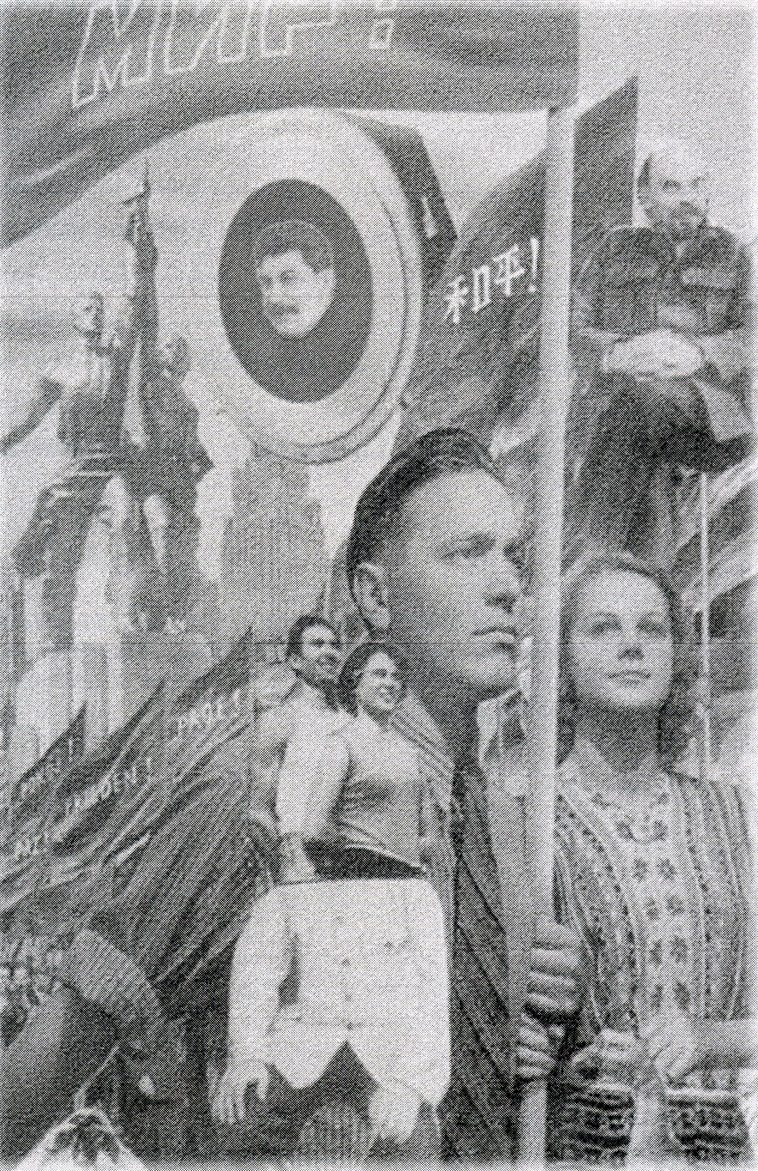

Moscow in the seventies. Dreadful, fascinating, intense… The realm of young Muscovites united by their insatiable appetite to live lives freely and fully, using creativity and poignant humor to fend off the omnipresent authorities’ attempts to break their spirits. In his new novel, Misha Feigin delivers a powerful impression of the era when the political trials showed signs of Stalin’s horrors, while sex, drugs, and rock’n’roll penetrating the Iron Curtain clashed with the seemingly impervious system.

Born and raised in Russia’s capital, Feigin had already achieved the status of one of the country’s premiere guitarists when he immigrated to the US in 1990, leaving behind an established position in the official arts scene, as well as memories of encounters with the KGB who were very interested in some of the underground bands Misha was associated with.

Since moving to Louisville, KY, Feigin has been featured on the National Public Radio and has toured throughout the US and around the world, releasing seven albums on American and British labels, and performing on many prestigious stages, such as Washington’s Kennedy Center and New York’s Knitting Factory. Despite being best known as a musician, Misha Feigin has started to gain footing among the literary critics since winning the Thomas Merton Prize for Poetry in 2000.

In this novel, Feigin presents a captivating collection of characters refined during the numerous concerts when the songs were intertwined with stories. The author’s experience brings to life his heroes and their adventures, as they struggle to maintain their dignity and freedom in a totalitarian state. As cultural and political clashes are becoming the way of life in everyone’s home, Searching for Irina gives the reader hope to carry on in our turbulent century.

In the mid-1960s

in one of the more darkly cynical episodes of the Cold War, the United States shopped two dissident Soviet writers to the KGB.

It all began about 1959, when Andrei Sinyavsky and Yuli Daniel (using the pseudonyms Abram Tertz and Nikolai Arzhak) began smuggling works – many of them critical and satirical comments on the Soviet regime – to the West, publishing them clandestinely.

By 1966, the KGB had arrested the two writers and charged them with spreading anti-Soviet propaganda. It would be some 20 years before the circumstances that led to their arrest became public. In 1987, the poet Yevgeny Yevtushenko reported that shortly after the two men had been tried, he visited then-Sen. Robert F. Kennedy’s apartment.

Kennedy, Yevtushenko wrote, “invited me into his bathroom, turned on the shower,” and revealed that U.S. agents had betrayed Daniel and Sinyavsky to the KGB in order to create an incident that would embarrass the Soviet Union and divert world attention away from the burgeoning problems the United States was facing in Vietnam.

The arrests of Sinyavsky and Daniel resulted in a show trial that attracted worldwide attention and resulted in long prison sentences for the two writers. It also became the flashpoint for a fiery period of intellectual and literary dissidence that would culminate in increased visibility for the work of writers like Aleksandr Solzhenitsyn and Andrei Sakharov, and would eventually lead to Mikhail Gorbachev’s glasnost (openness) policies.

“Searching for Irina,” a new novel by Russian emigre Misha Feigin, unfolds in the wake of the Sinyavsky/Daniel trial, during the turbulent, transitional ’70s. In a series of loosely connected vignettes that form a highly episodic memoir-novel, Feigin depicts a youthful Moscow counterculture that bears a strong resemblance to Haight-Ashbury in the ’60s. Against the stark backdrop of bureaucratic gloom, coldly impersonal modern architecture and long queues for groceries and liquor, Feigin’s alienated Moscow hippies flouted Soviet constraints by experimenting with the hippie holy trinity: drugs, sex and rock ‘n’ roll.

It’s a counterculture populated by a rogue’s gallery of larger-than-life wastrels and ne’er-do-wells. There is Sailor, who was once arrested for climbing to the top of the Bolshoi Theater and straddling one of the famous stone horses perched atop the building.

There is Kolya, a dealer in black market sound recordings, who distributes tapes of Frank Zappa, King Crimson, Bob Dylan and Jimi Hendrix. When Kolya visits the Moscow farmer’s market, he bypasses the tomatoes and sauerkraut and tracks down the Uzbekistan purveyors of poppies, from whom he buys the dried heads of opium poppies and grinds up a powdery substance that “was like swallowing crushed stale straw, a nauseating process,” but which would definitely produce a high. When hauled into the police station for questioning, Kolya makes off with a trove of police files, cuts them up and burns them in the toilet bowl (though in retribution, the cops set him up for a drug deal, and he spends a couple of years in detention).

There is God, whose twin passions are group sex and a seditious personal library of black market books.

And there is Irina. Born in Istanbul, she is the daughter of a Russian diplomat who was executed as an “enemy of the people.” Irina has experienced exile to Siberia, she has lived in cosmopolitan Odessa, she is a true poet and, until she is committed to a series of psychiatric gulags, she is the narrator’s lover and mentor. Her gradual disappearance into the asylums is the book’s central focus.

“Searching for Irina” lacks the grand narrative arch of a fully formed novel, but it compensates with deadpan wit, a cool, understated irony and intimate details about daily life on the streets of Moscow. And as the series of stories unfolds and reach its culmination in the final tale of Irina, a reader can take pleasure in observing Feigin’s control over language and form, which strengthen almost page by page. By the opening paragraph of the final story, he has developed a powerful, confident voice: “From the window of the reading room at the Lenin Library I could see snowflakes twirling around the yellow streetlights. The lights were on for only a few minutes, but the soft gray twilight already had sunk in the fresh deep winter darkness. A cozy green lamp shone on my table. The closed book lay under the lamp in front of me. I stroked the dark-blue old-fashioned binding with my fingers. It felt solid and cool.”


Feigin is already well known to Louisville music fans as a singer of eclectic folk and gypsy music and as an internationally recognized avant-garde guitarist. Based on this first work, he is also poised to become a writer to be reckoned with as well. Marty Rosen, Louisville Eccentric Observer 01/14/2004


An emigre’s surreal poetry

Misha Feigin brings his poetry to us in a slender volume, The Last Word in Astronomy (Fleur Publishing, 75 pp., $11.95). Having left Moscow in 1990, the artist continues to write and make music, giving us a glimpse of his mysterious, enigmatic homeland while explaining his feeling for America where he chooses to live and work.

As Feigin explores past experiences superimposed in our New World, the reader feels a blurring of the lines. Feigin shows that in our deepest selves, people are more the same than different.

It is in the love poems, such as “An Accident”, where we most often recognize similar glories and miseries:

When I moved my lamp on a desk-glass
just to cover your face in the photograph,
it seems I heard a quiet but persisting
gnawing sound-you were biting your way
through the glass, back to the surface
of my desire.


In “Agnostic Reflections,” the poet has a little fun. He compares Tolstoy’s writing of the snowy immensity of Russia, “Spit in the eyes of those who claim/ they can embrace the boundlessness” to his own spitting at his reflection in the bathroom mirror to wipe away dripping toothpaste. The writer’s humor takes aim not only at himself, but to his entire motherland as in “The Flux.” He quotes, “Everything is an ever changing/ flux, says Heraclites./ ” Let’s drink it” , the Russians respond. Then in “The Russians Drink”, he laughs, “The Russians drink/ to keep soul from freezing,/ life from getting too long.”– by Mary Popham, Special to The Courier-Journal Saturday, January 6, 2007, Book Review

Buy Searching For Irina – Misha Feigin here… 


the dew drop blues

Misha Feigin

The Dew Drop Blues – Music and Poetry

DPR Records

Recorded in May of 2008 by Nick Stevens and Mark Noderer at Downtown Recording, Louisville, Kentucky ©2010 BMI 2010

Tracklist: 1. Schubert and Schoenberg 0:12 2. The Dew Drop Blues, a poem 0:47 3. The Dew Drop Blues, music 8:47 4. The Code, a poem 1:30 5. The Code, music 5:30 6. M-94, a poem 0:56 7. M-94, music 5:37 8. Booms, Dooms, Kabooms, a poem 0:57 9. Booms, Dooms, Kabooms, music 4:17 10. Ascend, a poem 0:35 11. Ascend, music 5:57 12. Trapped, a poem 7:43 13. Trapped, music 6:50 14. Plant Eater, a poem 0:40 15. Plant Eater, music 9:05

Tracks: 3,5,13,15 – classical guitar 7 – steel string guitar 11 -dobro 9 – balalaika Music, poetry and photos by Misha Feigin DPR Records, 221 N. Clifton Ave. #31 Louisville, Kentucky 40206


With “Dew Drop Blues” Misha Feigin has created a beautiful set of anomalies, poetics that turn on an angle that only a bent mathematician such as he could invent and filled with a sardonic wit that is simultaneously dark and euphoric. And when words fail or need to transcend, Misha’s virtuosic guitar continues to propose impossibilities and hallucinations that tie everything together. — Elliot Sharp


Always enjoy Misha’s poetry and music-he is definitely a free spirit with a strong sense of inner direction. — David Liebman


Ascend

When you have
nothing left
but a song
the sound rises
undisturbed
sailing on lunar winds
through the lightlessness
expanding your heart
to the mouth of darkness
where the open space
begins

Buy The Dew Drop Blues – Music and Poetry (CD or MP3) here…


soul foods

Soul Foods

by Misha Feigin

Part 1 – The Yellow Cheese Road


Hofheim, Germany -“So, how often your father had Limburger cheese? Once a week?”

“Once a year!” chuckles my old Louisville friend with the good German name Maier.

“That was all my mother allowed him. She was English.” My friend shakes his head: “I still remember the stench. It was horrendous.”

Passion for smelly cheeses is certainly a clear sign of native heritage that was transplanted to the Land of the Free with German immigrants. And it somehow managed to survive through the years of relentless assimilation and constant trouble prompted by the frequent and (often) quite malignant misbehavior of the old country. The first wave of German immigrants reached the River City in the middle of the 19th century. Besides the ability to make strong-odored cheeses, the newcomers brought other skills. They were carpenters and butchers, tailors and cobblers, masons and, of course, beer brewers. They all wanted to settle down and build their own homes, so the city of Louisville generously provided them with a marshy piece of land on the edge of town.

The settlement acquired a trade name – Schnitzelburg (from the German Schnitzel – shred, scrap) – and later became the heart and soul of the area we know today as Germantown.

The sound of hammers and saws filled the humid Kentucky air, and in time the blocks of clean, whitewashed shotgun houses came to existence alongside solid, intrinsically build churches. Beer pubs opened their doors for the thirsty on seemingly every corner, offering their own hand-brewed beer. At the time you could observe young kids with pails hurrying down the neighborhood streets to the nearest beer dispenser to fetch fresh beer for a family dinner. (These days, can you think of sending your teenage son to get a couple six packs from the corner gas station? You better not.) Alas, the young beer messengers stopped their activities in Schnitzelburg in the first part of the 20th century, when commercial beer production squeezed the small breweries out of existence. But if you pay a visit to Schnitzelburg today, you can stop for a drink at any of the dozen neighborhood pubs that function in a four-by-five-block area. And in the place called Flabby’s, you can have some distinctly German dishes, including a Limburger cheese sandwich. Just do not let yourself to be intimidated by the smell; wash it all down with a pint of fresh Warsteiner on tap.

And if you prefer to know what you’re eating, here’s what the revered German Heinerman book of miracle healing foods tells us about Limburger cheese:

“Made of goat milk, strong smelling, but piquant, spice testing soft cheese with somewhat smutty yellowish surface.”

Bon appetit!

Germans in Kentucky!

I am sitting in an open air cafe on the main street (die Haupstrasse) of the small and pretty 650-year-old town of Hofheim, 15 miles northwest of Frankfurt. A waiter has just brought me a tall glass of fresh Wersteiner pilsner. The weather today is glorious, the temperature in the 70s. Cherry trees are in full bloom. Flowers are everywhere – in the house gardens, in the window flower-boxes, daffodils, tulips. Surprisingly, for the first time since before Easter, the German sky is serene blue with a few fluffy clouds.

It is lunch time, and I enjoy watching the busy crowd. Many people in the street dress with a style. The women often wear elegant scarves and master the art of walking on high heels on cobblestones. The men look quite relaxed in their long trench coats and Italian shoes. Sitting in a street cafe on the Haupstrasse feels just like sitting at a sidewalk table in one of the Heine Bros. coffee shops in Louisville. Every five minutes somebody you know stops to say hello or to exchange the news.

My street neighbor Andreas joins me at the table for a beer and a conversation. I show him the Flabby’s menu I have brought with me from Louisville.

“Germans in Kentucky!” Andreas looks surprised. “Do they eat Kentucky fried chicken?” He notices the German sausage and Limburger cheese sandwich on the menu. “I am impressed!” he utters with respect.

“We played jokes with Limburger cheese in my school years. If you put a little piece of it behind a heating radiator, in two or three days nobody will be able to breathe in the room.” Andreas goes on: “Maybe that is what Americans should look for in Iraq, the Limburger cheese WMD. A few well-trained cheese inspectors following the familiar smell – and no war.”

Another neighbor, Monika, joins us at the table with a cup of coffee. Now we speak about politics.

“Most of us in Germany view the Untied States negatively since the beginning of the war in Iraq,” she says. “We think of it as an illegitimate and harmful enterprise.” I ask what happened to the gratitude to Americans for liberating Germany from Hitler and the Nazis.

“I think it is over now,” Monika answers with the celebrated German directness. “We are not unfriendly to Americans. We understand the difference between people and the government.”

Andreas answers my other question. “We wear American blue jeans and sneakers – it’s all made in Indonesia anyway. It is just a fashion. We might all wear everything Russian style starting next week.” I order one more beer. We continue to enjoy ourselves, the weather, and peace in the neighborhood.


Misha Feigin is a Russian emigre, a musician and writer who lives in Louisville. He is currently touring Europe, where he is performing.  — Louisville Eccentric Observer March 21 2004

assemblies & workshops

Who is Misha Feigin ?

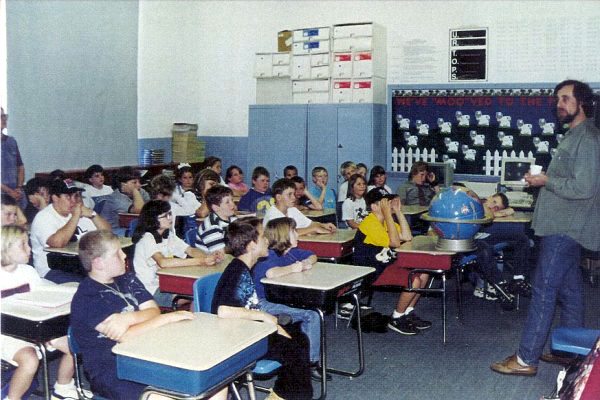
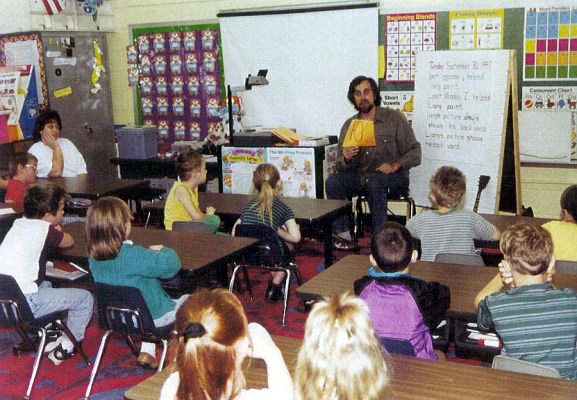
One of the best guitarists of Russia, singer-songwriter and storyteller Misha Feigin was born and raised in Moscow. He has toured extensively in most of the United States, Canada, and Europe. Misha left behind an established career hallmarked by four albums released on Russian “Melodia” label, appearances on popular radio and television shows, national and international tours, and publications in various magazines. The Russian independent radio station “Echo of Moscow” ended three days of emergency broadcasting after the failed coup in August 1991 with Misha’s song “Gulp of Freedom”.

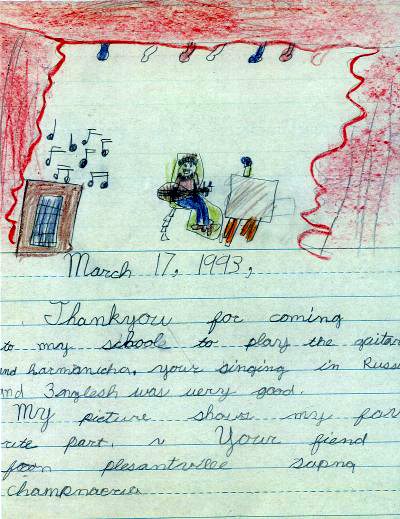
In the United States, Misha has performed concerts for over 300,000 students in 47 States and produced seven albums. He was featured on the NPR (National Public Radio) program “Mountain Stage”, and shared the stage with Peter Yarrow of Peter, Paul and Mary. Misha recently toured again in Russia. Misha examines the cultural differences among Russia, modern Germany, and the United States, including customs, schools, sports, and wildlife. The students will learn how unique and amusing American customs are, and will have fun asking questions, participating in discussions, and exploring Russian and German ways of life. Misha sings in English and Russian, and plays guitar, balalaika, piano, and harmonicas. His knowledge of English allows him to communicate with his audiences clearly and directly. Misha is an artist with Kentucky Educational Showcases, Very Special Arts (VSA Kentucky), Columbus Arts Council, and Young Audiences. Misha offers programs and workshops that can be tailored to elementary, middle, or high school audiences.

– School assembly performances (45 to 60 minutes) –

Custom-planned full-day residencies that include one performance and four “hands-on” workshops in a classroom, where Misha shares more detailed information about Russia and Germany and answers questions. The students will pick up a few Russian and German words and will be introduced to the Cyrillic alphabet. They will be able to explore some Russian and German artifacts such as money, art books, photographs, and folk-art items.

One-week or two-week residencies with multimedia creativity enhancement workshops. Misha uses games and creative exercises connecting music, creative writing, and visual arts of different styles, cultures, and eras to create stories, poems, songs and artwork. Students will experience the joy of collective musical improvisation, no matter what musical skill they have or what musical instruments they choose. Workshops are fun every minute! Programs and workshops are tailored to every particular age group: K-3, 4-6, 6-8, 9-12.

– Special programs and workshops for children with special needs. –

Study guides and curriculum connection webs are included. Curriculum areas reinforced: Art, Music, Social Studies, especially Geography and History, Language Arts, Social Skills. Fees are based on time and travel. Special discounts for block-booking.